Court-Admissible Forensics
In modern litigation, the vast majority of evidence is digital. Emails, encrypted chat messages, GPS logs, and deleted files are the foundation of civil lawsuits and criminal prosecutions. However, digital evidence is extremely fragile. If an internal IT department simply copies files from a suspect's hard drive onto a USB stick, the metadata is permanently altered, and the evidence will be immediately thrown out of court.
The Doctrine of Forensically Sound Acquisition
Digital forensics is not standard IT work. It is a highly specialized scientific discipline governed by strict legal precedents (such as the Daubert standard). Our investigators are certified forensic examiners who strictly adhere to court-mandated protocols for the acquisition, preservation, and analysis of digital evidence.
When we acquire a device, we do not boot it into its operating system. Doing so alters system logs and changes file access dates. Instead, we utilize hardware write-blockers.
The Acquisition Architecture
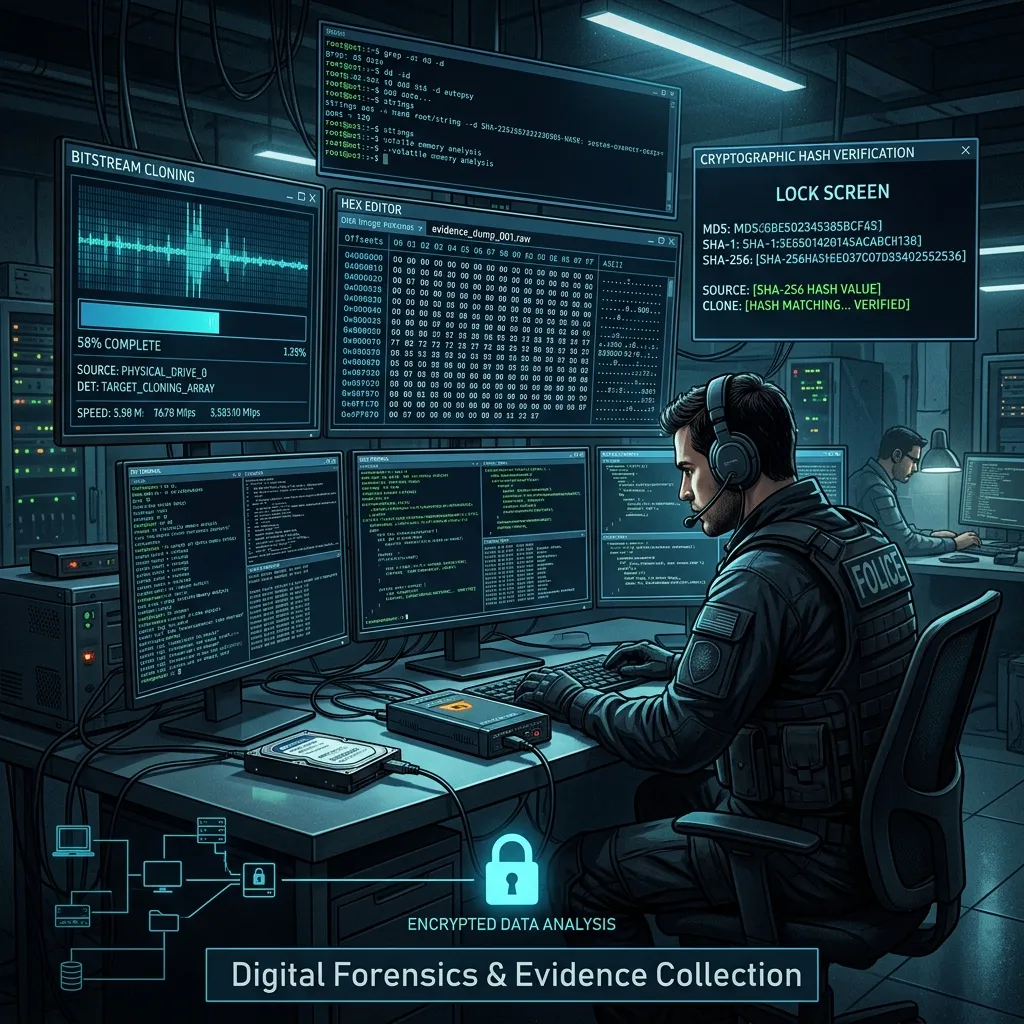
- Bit-Stream Imaging: We do not copy "files." We copy the physical drive byte-by-byte. This creates a perfect mirror image of the drive, including unallocated space, hidden partitions, and fragments of files the user believed they had permanently deleted.
- Cryptographic Hashing: To prove to a judge that the evidence has not been tampered with, we generate MD5 and SHA-256 cryptographic hashes of both the original drive and our forensic image. If a single bit of data is altered, the hash values will completely change. Matching hashes scientifically guarantee that the evidence is pristine.
- Mobile Device Forensics: We utilize advanced exploitation tools (such as Cellebrite) to extract data from modern, highly encrypted smartphones. This includes bypassing lock screens on compromised corporate devices to extract GPS histories, deleted iMessages, and third-party application databases (Signal, WhatsApp).
- Cloud Storage Acquisition: When the evidence resides on AWS, Google Workspace, or Microsoft 365, we utilize API-level forensic tools to preserve the data defensively, ensuring that server-side metadata and revision histories are captured alongside the files themselves.
The Illusion of Deletion
When a user deletes a file and empties the recycle bin, the data is not actually destroyed. The operating system merely removes the pointer to the file, marking that physical space on the hard drive as available to be overwritten. Until new data explicitly overwrites it, the original file remains perfectly intact in the unallocated space. Our forensic tools carve this "deleted" data out of the raw hex code, routinely resurrecting critical evidence.
Expert Testimony
Finding the data is only half the battle; explaining it to a jury is the other. Our analysts do not just provide raw data dumps. We produce comprehensive, easy-to-understand forensic reports detailing exactly what occurred, when it occurred, and who performed the action. Crucially, our experts possess extensive experience testifying in state and federal courts, withstanding hostile cross-examination to defend our methodology and our findings.