The Intelligence Gap: Why Reactive Cybersecurity is Failing
Authorized By: Intel Analyst
For decades, the corporate cybersecurity playbook was remarkably simple: build a taller wall, dig a deeper moat, and wait for the enemy to strike. You bought the best firewalls, installed the latest endpoint detection systems, and hoped your perimeter would hold.
This is the definition of reactive security. And in today's hyper-connected, aggressively targeted digital landscape, relying solely on a reactive posture is a mathematical guarantee of eventual compromise.
At TheCyberIntelLabs, we recognize a critical vulnerability plaguing the modern enterprise—a vulnerability not found in code, but in strategy. We call it the Intelligence Gap. It is the fatal blind spot between the moment a threat actor targets your organization and the moment your traditional security alerts you to a breach. By the time the alarm bells ring, the extraction of your intellectual property, financial assets, or sensitive data is already underway.
It is time to transition from waiting for the strike to hunting the threat.
The Failure of the Perimeter: Why Reactive IT Security is Obsolete
Standard IT security is designed to stop known threats using known signatures. It is a necessary foundation, but it is fundamentally blind to the modern adversary.
Today's Advanced Persistent Threats (APTs), state-sponsored actors, and sophisticated ransomware syndicates do not simply brute-force their way through your firewall. They engineer zero-day exploits. They compromise third-party vendors in your supply chain. They utilize social engineering and Open-Source Intelligence (OSINT) to bypass technical controls entirely by targeting your human perimeter.
When you rely entirely on a reactive model, you concede the most valuable asset in any conflict: initiative. You allow the adversary to dictate the timeline, the method, and the battlefield.
Bridging the Gap: The Paradigm Shift to Proactive Cyber Intelligence
To bridge the Intelligence Gap, organizations must evolve from standard cybersecurity to Cyber Intelligence.
Intelligence is not about analyzing logs after an incident; it is about gathering actionable data to neutralize a threat before an indicator of compromise (IoC) ever hits your network. This requires a synthesis of:
- › Dark Web & Deep Web Monitoring: Tracking adversary communications, identifying compromised credentials belonging to your executives, and spotting chatter about your proprietary assets before an attack is launched.
- › Threat Actor Profiling: Understanding who is likely to target your specific industry, what their motives are, and how their known tactics, techniques, and procedures (TTPs) operate.
- › Proactive Vulnerability Research: Identifying the flaws in your digital footprint—including cloud misconfigurations and exposed digital assets—before automated scanners utilized by threat actors find them.
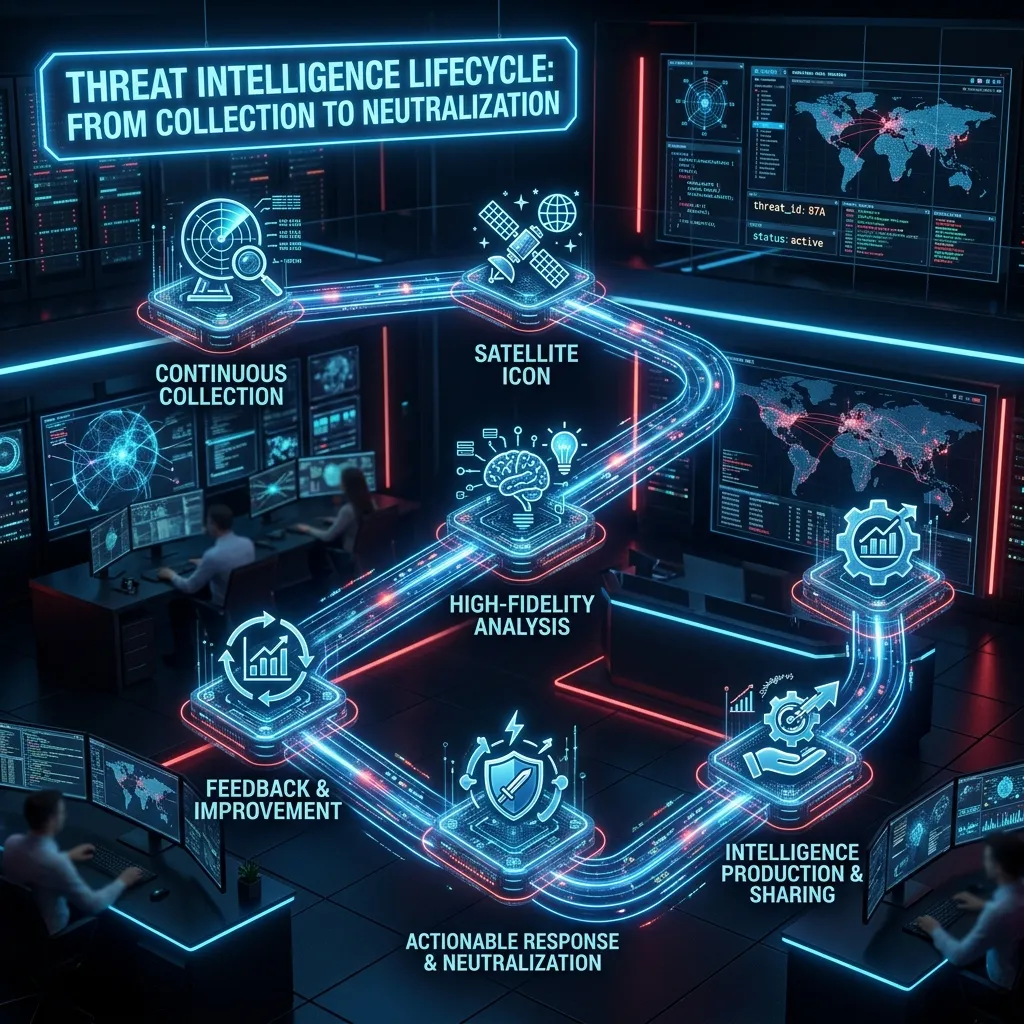
Figure 1: The Threat Intelligence Lifecycle - From Collection to Neutralization
Inside the Secure Operations Center (SOC): Our Methodology
At TheCyberIntelLabs, our methodology is built on military-grade intelligence cycles, adapted for the corporate battlespace. Operating from our Secure Operations Center (SOC) at an undisclosed location, our analysts do not just monitor dashboards—they actively hunt.
Here is the operational framework that separates elite cyber intelligence from standard managed IT services:
1. Continuous Collection
Intelligence requires raw data. We aggregate signals from a massive array of sources, extending far beyond your network perimeter. This includes open-source intelligence (OSINT), dark web telemetry, proprietary threat feeds, and global malware analysis networks. We map your entire external attack surface—every forgotten subdomain, every exposed employee credential, every third-party integration.
2. High-Fidelity Analysis
Raw data is useless without context. Our analysts—specializing in digital forensics, penetration testing, and counter-intelligence—correlate these data points to separate the noise from genuine, targeted threats. We apply behavioral analytics and adversary emulation to determine if a perceived threat has the capability and intent to breach your specific architecture.
3. Actionable Dissemination & Response
When an imminent threat is identified, we do not simply forward an automated alert. We provide context-rich, actionable intelligence. You receive a precise briefing: the nature of the threat, the expected attack vector, and the immediate mitigation steps required to neutralize it. Furthermore, our incident response and digital forensics teams are continuously staged to interdict active threats, preserve volatile evidence, and sever the adversary's access.
Closing the Gap
The adversary is already executing reconnaissance on your organization. The only question is whether you will see them coming.
Traditional cybersecurity tells you that you are under attack. Cyber intelligence tells you who is planning to attack you next week, why they chose you, and how to dismantle their operation today.
At TheCyberIntelLabs, we provide the elite intelligence and private investigation capabilities necessary to close the Intelligence Gap. It is time to secure your perimeter from the outside in.
Frequently Asked Questions
What is the Intelligence Gap?
How does proactive intelligence differ from reactive security?
Technical Assistance Required?
Discuss your security concerns with our expert analysts in a confidential environment.
Discussion
Load comments when you are ready. This avoids background network calls during page navigation.